
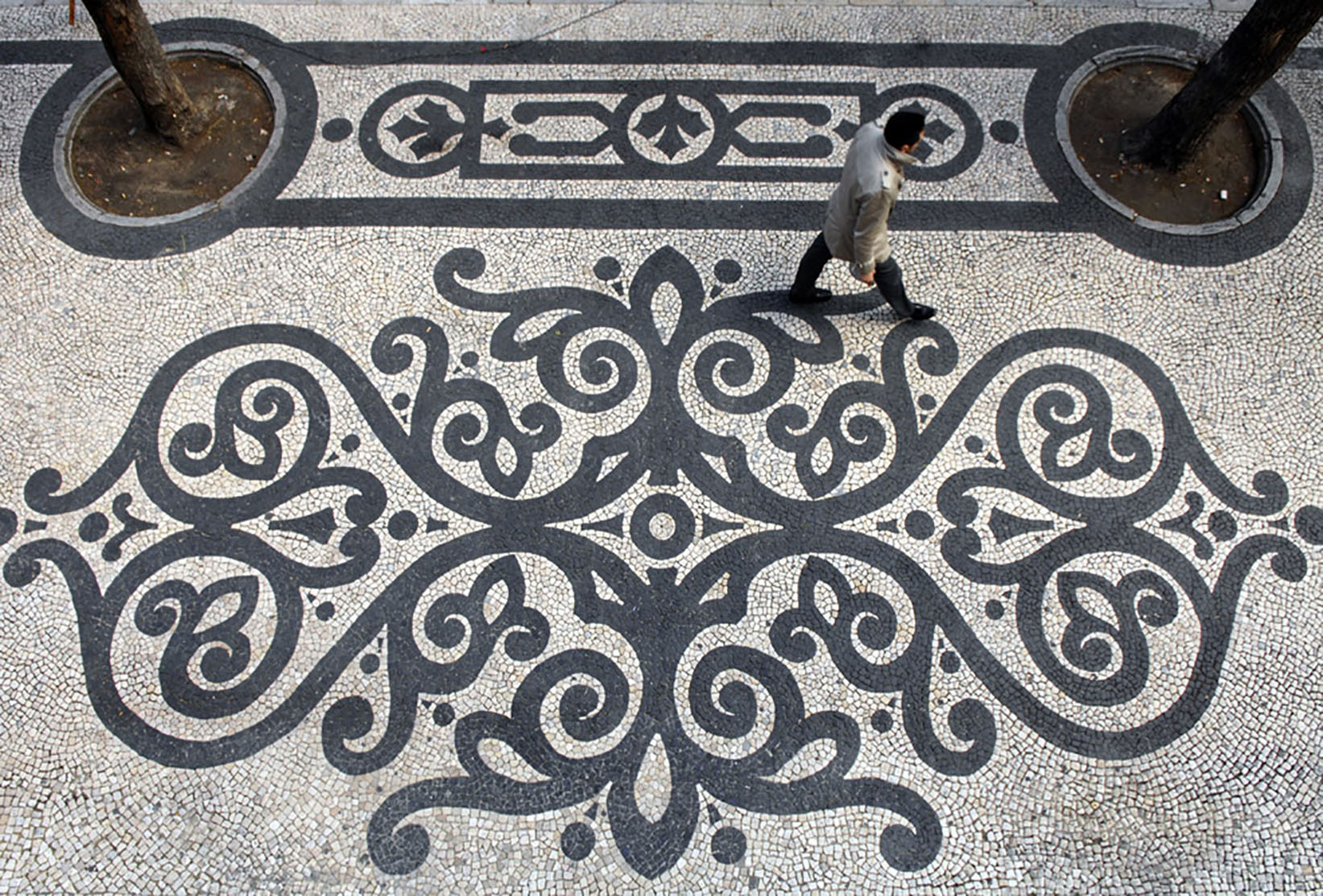
Portuguese cobblestone pavement, a generic term, refers to all cobblestone paving, generally for pedestrian use, made from natural stones. These are typically white limestone, but also include basalt or other stones (such as marble, slate, milky quartz, or granite). The stones vary in shape and are small (between 3-4 cm and a maximum of 7 cm). They are laid on the ground in either an irregular or regular pattern, depending on the technique used.
A form of producing and maintaining pavements through traditional know-how. The art of laying cobblestones is thousands of years old, but the production of Portuguese cobblestone pavement as a specific technique began in the first half of the 19th century in Lisbon. It was there that it developed and gained extraordinary expression in both quantity and quality, expanding throughout the country and across several continents as an undisputedly striking feature of not just Lisbon’s but also the nation’s identity.
Characterised by its pre-industrial nature, aesthetic beauty, durability, economic and ecological sustainability, this art also has a fundamental social dimension for those who produce and enjoy it: the cobblestone pavers, the stone extractors, and the pedestrians who walk on it, often without properly seeing its worth. It’s the stone extractors and processors who provide the raw material, and it’s the pavers who, with their mastery—a living tradition passed from father to son or acquired through practising the profession with other pavers—execute it on the ground. This is done in specific stages, using their own tools and a command of centuries-old techniques, combining stones, especially limestone and basalt, worked into different sizes, shapes (according to specific designs defined by moulds), and different colours, producing stone carpets that still adorn the streets of the Portuguese capital and so many other towns across the country and abroad.
The School of Pavers gave a boost to formal systematic training and professionalisation, through appropriate certification for anyone who wants to enter the world of Portuguese pavement as a paver.
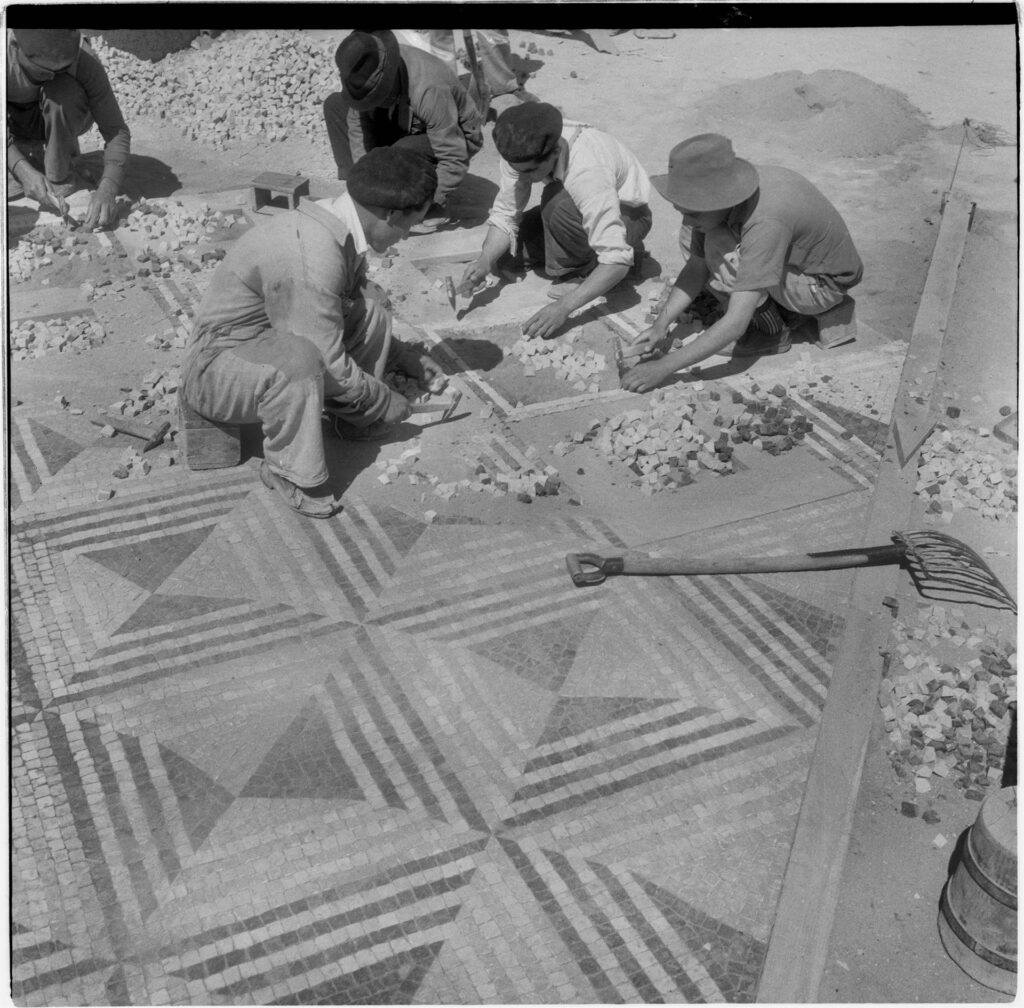
This art form has different names that are often mistakenly used as synonyms. In Portuguese pavement, both the so-called plain white pavement, which is undecorated, and the artistic pavement, with its designs, rely on the paver’s expertise to cut and lay the stone. They arrange it on the ground in a more or less uniform way, using their own specific techniques.