
Nomination Summary
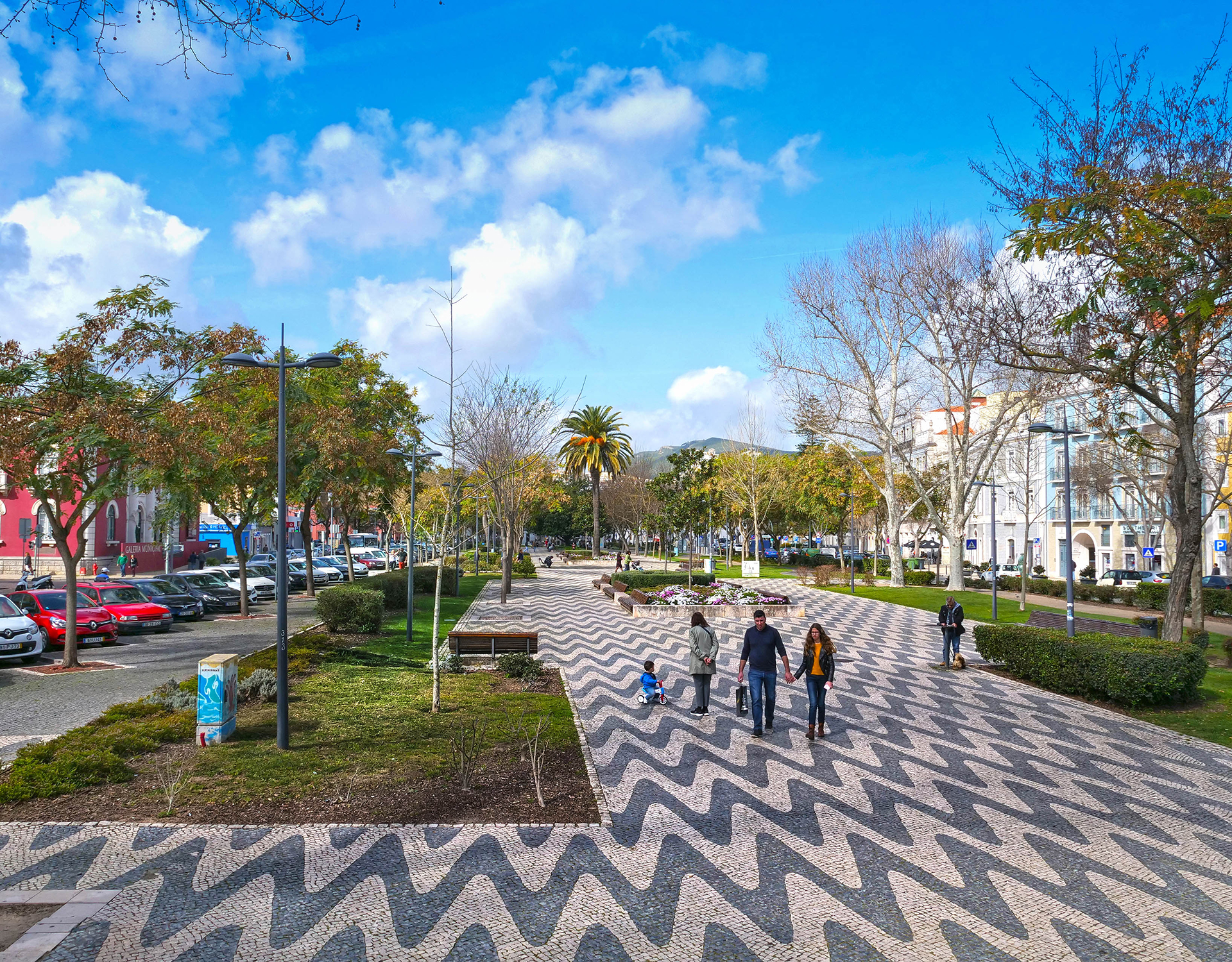


Portuguese pavement is a type of handcrafted stone pavement with distinctive characteristics that are now considered traditional. It is part of the body of traditional knowledge and crafts, both as a process for transforming lithic resources and as an artistic expression, serving the purpose of paving. It is especially used in pedestrian areas, streets, and squares, among others. It represents a unique and exclusively Portuguese way of creating ornamental mosaic pavements, present in 290 of the country’s 308 municipalities, based on an art that combines aesthetic beauty with functionality, often drawing on the creativity of the artists who execute it, using techniques of their own choosing.
Characterised by its social dimension and ecological and economic sustainability, the practice is traditionally transmitted in an informal and mimetic way, from parents to children and from masters to apprentices, although there are now also training schools.
Although it is a national cultural expression, widely recognised worldwide, the art adapts to regional geological specificities, using the main local lithic resources available.The demanding work, low wages, and limited social recognition make the profession unattractive to young people, and the number of pavers is currently in sharp decline.
The “world of Portuguese pavement” begins in the quarry with the stonemasons and involves various other skills and artisanal professions — such as tools forged by blacksmiths or templates made by carpenters — which take part in different stages of the process. The designs are pre-conceived by architects or other visual artists. As the main holders of the craft, the pavers adapt and apply these designs to the pavement, which is ultimately enjoyed by everyone.
Born in Lisbon, the art quickly spread throughout the country and, later, around the world. Today, alongside the Portuguese language and azulejo tiles, it is a strong symbol of national identity and culture.
The practitioners are the pavers — mostly older men (between 55 and 60 years old), with only a few women, coming from different regions. It is estimated that around 700 are active across the 280 municipalities, a small number considering that, for example, Lisbon alone had about 400 pavers in the 1940s, while today there are little more than a dozen. They still follow a traditional hierarchy, from apprentice pavers to master (it is estimated that only 20% reach this status). Masters are generally the oldest and most respected, and they are primarily responsible for transmitting the craft. Today, there are also specialised schools that teach the art. The continuity or revitalisation of the cycle depends on the engagement of younger generations in the profession.
Traditional learning of the craft is, above all, mimetic and informal. Technical skills depend on the transmission and acquisition of knowledge related to the ability to handle tools, as well as to the quantities and qualities of the raw materials used (stone, sand, water). Initial knowledge is traditionally passed on across generations, from the older to the younger: the better the masters, the greater the apprentices’ command of the techniques.
In recent decades, training courses have been created in 23 officially certified teaching institutions for cobblestone pavers — of which only six actually delivered courses, having certified, since 2021, only 22 students with the appropriate technical skills.
The social dimension is present in the know-how of pavers and is essential for preserving the memory and the social, professional, cultural, and symbolic identity shared by communities and groups. Professional teams of cobblestone pavers, associations, and quarry operators construct a common vision of the world, particularly attentive to the characteristics of the stones and their potential use in artistic paving. This also includes a specific jargon and ritualised practices (such as, for instance, initiation rites for newcomers), which generate a strong shared sense of belonging.
This social dimension also contributes to the appreciation of individuals, through the recognition of their skills, and of communities at different levels of renown (for example, Fanhões, which proclaims itself the “Capital of the Pavers”, or Gáfete, which calls itself the “land of the pavers”), as well as of master pavers who are particularly recognised for their extraordinary work and experience.
Portuguese cobblestone pavement has a unique cultural value and identity, which has always granted it national and international recognition, namely in Brazil — where it is known as “pedra portuguesa” (as in the famous Calçadão of Rio de Janeiro) and features in the most prestigious areas of the cities — as well as in China, Cape Verde, Mozambique, and Spain.
Yes, all aspects of this cultural asset are compatible with the requirement of mutual respect, since pavers share a common sensitivity, taste, and dedication to the art, which strengthens team spirit and group work. This practice also encourages intergenerational dialogue and the admiration of younger people for the older masters.
Yes, the art is compatible with sustainable development, namely with Goal 8, which aims to “promote sustained, inclusive, and sustainable economic growth, full and productive employment, and decent work for all”; and with Goal 11, target 4, which explicitly calls for the “strengthening of efforts to protect and safeguard the world’s cultural and natural heritage”.
Yes, access to the skills of this know-how requires several years of learning and training, from the stage of apprentice to that of master cobblestone paver. A long period is necessary to know where the “vein of the stone” lies, where to set the hammer, how to break the stone correctly, or how to measure the ground and pave according to the guidance of the moulds.
Progression through the professional categories — from labourer to paver’s assistant, up to being regarded as a paver-artist or master paver — traditionally required the undertaking of an entrance test, demonstrating mastery of certain techniques in laying Portuguese pavement or in producing a design. Informally, some ritual initiation practices for newcomers to the profession also continue to be observed today.
The public visibility of Portuguese cobblestone pavement as a street art reinforces a significant dimension of Intangible Cultural Heritage (ICH), namely a traditional know-how.
Stone craftsmanship has always been present since prehistory, and its use as a paving technique has also been creatively developed by societies over time. This art is an extraordinary form of that long-lived diversity.
The learning process of the cobblestone paver is based mainly on empirical knowledge, but formal training includes subjects (mathematics, geometry, geology, topography, and art), thus requiring specific qualitative skills and ensuring appropriate education.
By enabling both women and men to work as pavers, the art promotes gender equality.
By providing income for quarry operators, Portuguese pavement pavers, and tourist attractions, the art supports inclusive economic development.
As it involves the surface extraction of stone from indigenous Portuguese quarries, which nature can easily reclaim, and as it allows the ground to breathe and rainwater to infiltrate the soil, reducing its massive run-off, it also contributes to environmental sustainability.
It promotes Portuguese cultural identity by defining a unique cultural sensibility, a sense of belonging and pride for national citizens, and recognition from foreigners. The light of Portuguese urban landscapes is also a consequence of these pavements.
Concerned with the current challenges of their profession, pavers have always shared, during fieldwork, their ideas on how to address them.
One of these pavers was Master Fernando Correia, who, in 2016, submitted the first petition to the Assembly of the Republic for the nomination of Portuguese pavement as Intangible Cultural Heritage. He gathered thousands of signatures, and the petition was well received by Members of Parliament from all political parties represented in the chamber.
For the preparation of the present nomination, cobblestone pavers were also central in sharing their devotion and commitment to their art, as well as their concerns, providing information on the details of their know-how, documentation (photographs, press records, etc.), proposing safeguarding measures to be implemented, and monitoring their fulfilment.
Since then, many pavers have also participated — with informed consent — in video interviews and in meetings promoted by the Associação da Calçada Portuguesa, which culminated in the creation of an associated group of pavers, bringing together exclusively professionals from various Portuguese localities, who participated and contributed to the development of the nomination.
The participation of municipalities in the activities for the appreciation of pavers promoted by the Associação da Calçada Portuguesa should also be highlighted, and, in particular, the direct involvement of the municipalities in the preparation of the nomination — namely Braga, Estremoz, Faro, Funchal, Lisbon, Ponta Delgada, Porto de Mós, and Setúbal — through a working group created for that purpose.
Additionally, pavers were involved in the various stages of the preparation of the submission of Portuguese cobblestone pavement to the National Inventory of Intangible Cultural Heritage, in 2021.